- Cleanamerica
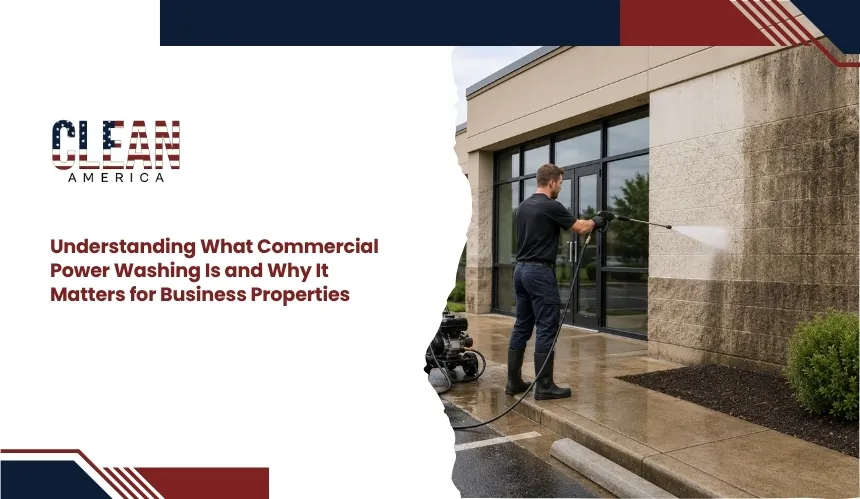
Understanding What Commercial Power Washing Is and Why It Matters for Business Properties
Commercial properties are constantly exposed to dirt buildup, oil stains, pollution, mold, and heavy foot or vehicle traffic that gradually affects exterior surfaces. Without regular cleaning, these contaminants can damage building materials, reduce curb appeal, and create an unprofessional appearance for customers, tenants, and visitors.
Studies on commercial property maintenance show that exterior cleanliness can strongly influence customer perception and long-term surface durability. Commercial power washing helps businesses remove stubborn buildup from sidewalks, parking lots, building exteriors, and other high-traffic areas using specialized high-pressure cleaning equipment.
This blog explains what commercial power washing is, how it works on different surfaces, and why it matters for maintaining commercial properties. It also covers the long-term benefits of regular exterior cleaning and why many businesses choose professional commercial power washing services.
1. What Is Commercial Power Washing
Commercial power washing is a high-pressure cleaning method used to remove dirt, grease, mold, algae, stains, and environmental buildup from exterior commercial surfaces. Businesses commonly use this service to maintain cleaner property conditions and improve the appearance of heavily used outdoor areas.
Unlike basic surface cleaning, commercial pressure washing is designed for larger properties and tougher contaminants that develop over time. Professional equipment allows businesses to clean exterior surfaces more efficiently while helping reduce long-term buildup and deterioration.
How commercial power washing works on exterior surfaces
Commercial power washing uses pressurized water systems to break down and remove contaminants attached to exterior materials. Different pressure levels and cleaning techniques are selected depending on the surface type and the severity of the buildup.
Professional cleaning crews may also use heated water systems or specialized attachments for surfaces affected by grease, oil residue, mildew, or industrial debris. Proper cleaning methods help restore cleaner surfaces without causing unnecessary material damage.
What types of commercial areas are commonly cleaned
Commercial properties contain several exterior areas that experience continuous exposure to traffic, weather conditions, and environmental pollutants. These surfaces often require regular cleaning to maintain appearance and reduce buildup-related damage.
Some of the most commonly cleaned commercial areas include:
- Parking Lots: Vehicle traffic often leaves behind oil stains, tire marks, dirt buildup, and debris across paved surfaces.
- Storefront Entrances: Entryways collect heavy foot traffic, moisture, and surface stains that quickly affect overall property appearance.
- Concrete Sidewalks: Walkways commonly develop dirt buildup, algae growth, and discoloration caused by weather exposure and daily use.
- Building Exteriors: Exterior walls and siding may accumulate pollution residue, mildew, and environmental staining over time.
- Loading Areas: Industrial zones often accumulate dust, grease, chemical residue, and debris from operational activities and deliveries.
2. Why Commercial Power Washing Matters for Property Appearance and Maintenance
Exterior cleanliness plays a major role in how commercial properties are perceived by customers, employees, tenants, and visitors. Dirty sidewalks, stained concrete, and discolored building exteriors can make businesses appear poorly maintained even when interior spaces are properly managed.
Commercial power washing helps businesses maintain cleaner outdoor environments by removing buildup before surfaces become heavily stained or structurally affected. Regular cleaning also supports long-term property maintenance by helping exterior materials remain in better condition over time.
How exterior cleanliness affects customer perception
Customers often notice exterior conditions before entering a commercial property, making curb appeal an important part of the overall business image. Clean storefronts, sidewalks, and parking areas generally create a more professional and organized first impression.
Properties with visible dirt buildup, mold growth, or oil stains may appear neglected and less inviting to visitors. Consistent exterior cleaning helps businesses maintain a cleaner appearance that reflects higher maintenance standards and professionalism.
Why regular power washing helps prevent long-term surface damage
Exterior contaminants such as grease, algae, moisture, and pollution residue can gradually weaken commercial surfaces when left untreated. Over time, buildup may contribute to discoloration, premature wear, and deterioration across concrete, siding, pavement, and other materials.
Some common issues caused by long-term surface buildup include:
- Concrete Discoloration: Dirt, oil, and environmental residue can gradually stain sidewalks, curbs, and parking areas permanently.
- Mold and Algae Growth: Moisture-heavy areas may develop slippery biological buildup that affects both safety and surface condition.
- Surface Deterioration: Embedded grime and contaminants can slowly weaken exterior materials and increase long-term maintenance needs.
- Premature Aging: Exterior surfaces exposed to untreated buildup often lose their cleaner appearance and structural quality more quickly.
- Drainage Problems: Dirt and debris accumulation may interfere with proper water flow around commercial walkways and paved surfaces.
3. What Problems Commercial Power Washing Helps Prevent
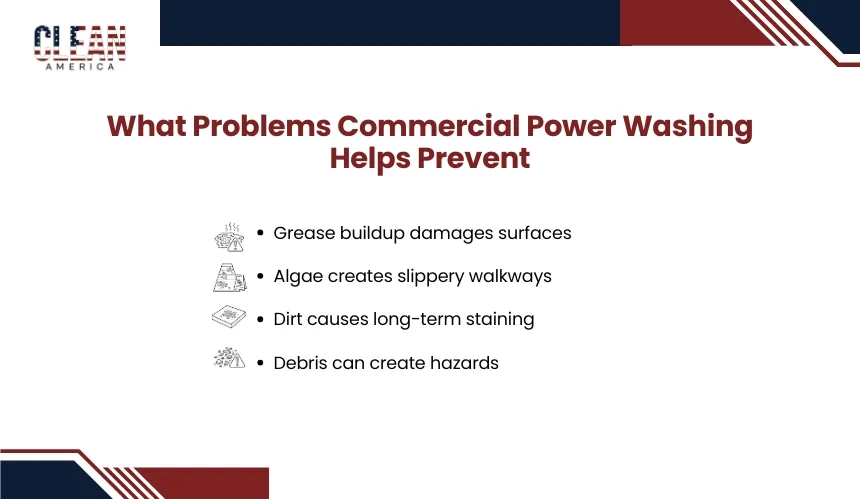
Commercial surfaces are exposed to continuous environmental stress from weather conditions, vehicle traffic, moisture, and industrial activity throughout the year. Without regular cleaning, contaminants can gradually build up and create maintenance issues that affect both property’s appearance and overall functionality.
Commercial power washing helps businesses remove harmful surface buildup before it leads to larger cleaning, repair, or safety concerns. Preventive cleaning also helps maintain cleaner conditions across heavily used areas that experience constant exposure to dirt, grease, and environmental residue.
How grease, algae, and dirt buildup create maintenance issues
Oil residue, algae growth, dust accumulation, and embedded grime can slowly damage exterior surfaces when left untreated for long periods. These contaminants may penetrate porous materials such as concrete and pavement, making stains more difficult to remove later.
Heavy buildup can also increase moisture retention across exterior surfaces, creating conditions that contribute to mildew growth, discoloration, and surface wear. Routine power washing helps reduce these issues before they require more extensive restoration work.
Why neglected exterior surfaces can become safety hazards
Dirty or slippery surfaces can create hazardous conditions for customers, employees, and visitors in high-traffic commercial areas. Grease buildup, algae growth, and accumulated debris often increase the risk of slips and falls near entrances, sidewalks, and parking areas.
Some common safety concerns caused by neglected exterior surfaces include:
- Slippery Walkways: Moisture and algae buildup can make sidewalks and entry paths unsafe during rainy or humid conditions.
- Oil-Stained Pavement: Grease and automotive residue may reduce traction across parking lots and loading areas.
- Blocked Visibility: Dirt-covered signage and stained entryways can affect visibility and overall property presentation.
- Debris Accumulation: Leaves, mud, and environmental buildup may create uneven or obstructed walking conditions around commercial spaces.
- Unsanitary Conditions: Dumpster pads and waste collection zones can develop bacterial buildup and strong odors without regular cleaning.
4. What businesses should consider before scheduling service
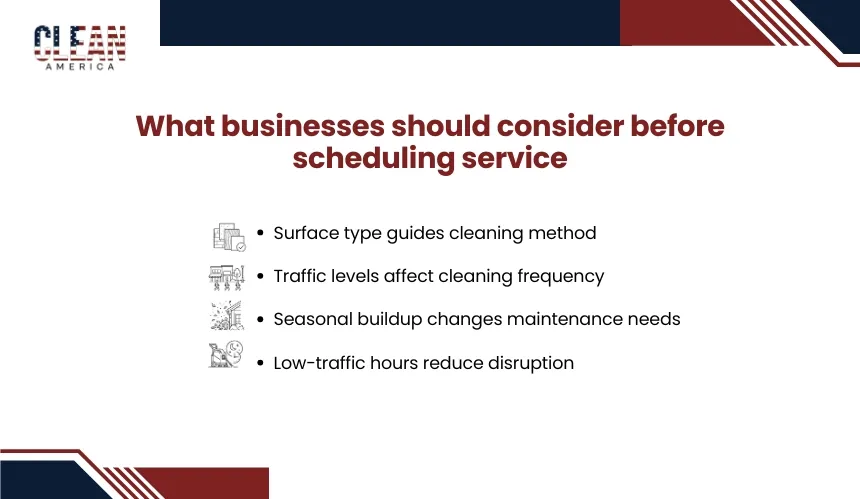
Different commercial properties require different cleaning schedules depending on traffic levels, operational activity, and environmental exposure. Businesses should evaluate how quickly exterior surfaces accumulate buildup and which areas experience the highest levels of public use.
Some important factors to consider before scheduling commercial power washing include:
- Surface Material Type: Different exterior materials require specific pressure settings and cleaning methods to prevent surface damage.
- Traffic Volume: High-traffic properties generally accumulate stains, dirt, and debris faster than lower-activity commercial spaces.
- Seasonal Conditions: Rain, dust, pollen, and environmental exposure can affect how often exterior cleaning becomes necessary.
- Business Operations: Scheduling cleaning during lower-traffic hours helps minimize disruption for employees, customers, and visitors.
- Cleaning Frequency: Routine maintenance schedules often help prevent severe buildup and reduce long-term cleaning difficulties.
Frequently Asked Questions
Is commercial power washing the same as residential pressure washing?
Commercial power washing typically involves larger equipment, stronger pressure systems, and cleaning methods designed for high-traffic business environments. Commercial properties also require cleaning for larger surface areas and more severe buildup compared to most residential spaces.
Can commercial power washing remove graffiti from exterior walls?
Professional power washing can often remove graffiti from concrete, brick, metal, and certain coated surfaces depending on the paint type and how long the graffiti has been present. Some situations may also require specialized cleaning solutions for complete removal.
Does commercial power washing use hot water or cold water?
Both methods may be used depending on the surface condition and the type of buildup being removed. Hot water systems are commonly used for grease, oil, and industrial residue because heat helps break down contaminants more effectively.
Can power washing damage commercial surfaces if done incorrectly?
Excessive pressure or improper cleaning techniques may damage paint, siding, concrete coatings, and delicate exterior materials. Professional cleaning companies adjust pressure levels and equipment settings based on the surface being cleaned.
How long does commercial power washing usually take?
Project length depends on property size, contamination levels, surface type, and the number of areas being cleaned. Smaller storefronts may require only a few hours, while larger commercial facilities can take significantly longer.
Is commercial power washing environmentally friendly?
Many professional companies use water-efficient systems and environmentally responsible cleaning methods designed to reduce chemical runoff. Proper drainage management also helps limit environmental impact during large-scale exterior cleaning projects.